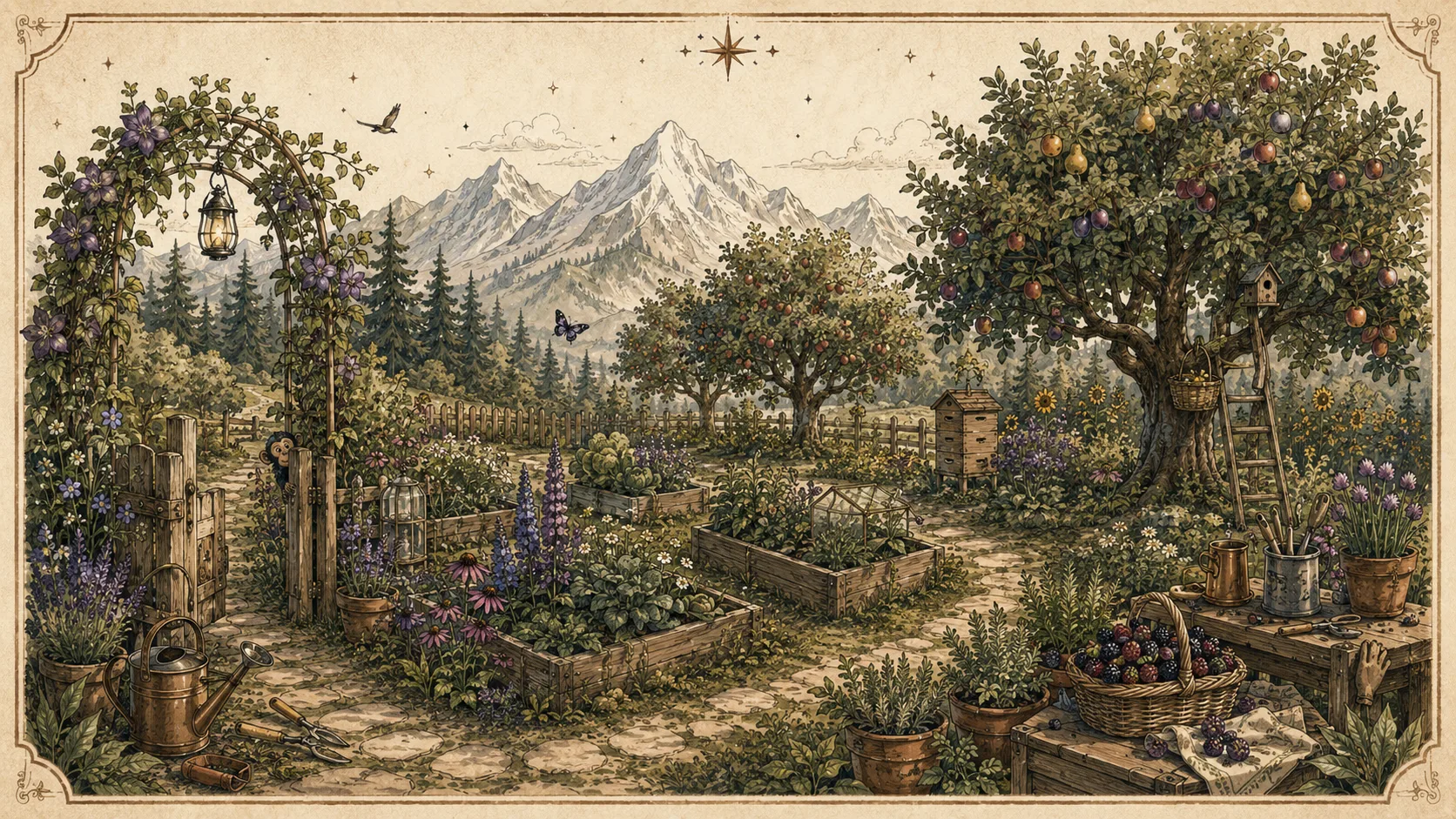
garden plot — field station grounds
Garden Plot
Something has been put in the ground here. Several things, in fact. Some are clearly plants. Some are negotiations with fate.
After three deeply unnecessary nights of frost, the garden has entered its first official season of experimental chaos. The figs, peppers, squash, and a few potatoes have been dramatically removed from the plotline. We honor their optimism.
Meanwhile, the mustard family is thriving with suspicious confidence. Kale, cabbage, radishes, and their spicy little cousins appear to have interpreted the frost as encouragement.
Skirret is still standing. Sunchokes are cheerful. Rhubarb is unbothered. Onions are doing onion things. The goji berry and raspberry are acting like they signed up for this.
A garden is basically a small outdoor laboratory for humility, which makes it uncomfortably similar to parenting and AI. You introduce promising young entities into a semi-controlled environment, give them support, observe unpredictable behavior, and occasionally wonder whether you are the responsible adult or merely the confused intern with a watering can. The figs may fail. The peppers may perish. The squash may dramatically exit the simulation. But something always keeps growing, and usually it is not the thing that read the project plan.